Allergy friendly snacks start with the exact label
Choosing allergy friendly snacks for a child starts with the exact package in your hand, not a familiar brand name, a front-of-pack claim, or what worked last month. Recipes, suppliers, package sizes, and manufacturing locations can change. A snack that fits one child’s allergy plan in one flavor or size may not fit in another version.
Build the habit of reading the full label every time you buy, pack, or serve a snack. Start with the product name, flavor, and size; read the full ingredient list; check any Contains statement; then review advisory wording such as “may contain” or “made on shared equipment.” For a deeper routine, use this guide to read the exact snack label before relying on memory.
In the United States, FDA rules require major food allergens used as ingredients to be declared in plain language for most packaged foods the FDA regulates. The nine major allergens are milk, egg, fish, crustacean shellfish, tree nuts, peanuts, wheat, soybeans, and sesame. Gluten, barley, rye, and honey are not major allergens under FDA allergen labeling rules, even though they may still matter for an individual child’s diet or care plan.
Use a simple snack label checklist
A checklist helps answer the everyday question: how do I choose snacks for a child with food allergies? Start by matching the snack to the child’s written allergy plan, then compare that plan with the label. Do this even for simple-looking foods such as crackers, fruit snacks, granola bars, popcorn, chips, yogurt tubes, cookies, trail mixes, and classroom treats.
Read the ingredient list from beginning to end, including ingredients in parentheses. Snack foods often have coatings, seasonings, chocolate pieces, fillings, glazes, or sub-ingredients that matter. A Contains statement can be a helpful checkpoint, but it is not a shortcut. A separate Contains line is not always required if the allergen source is already declared in the ingredient list.
Do not treat claims such as “school friendly,” “plant-based,” “dairy-free,” “vegan,” “natural,” or “made with whole grains” as allergen answers by themselves. They may be useful context, but the ingredient list, allergen declaration, advisory wording, manufacturer information, and the child’s care plan still decide whether the snack belongs in that child’s lunchbox.
- Check the exact flavor and package size
- Read the full ingredient list
- Check the Contains statement if present
- Review advisory wording
- Compare with the child’s allergy plan
- Recheck before serving, not only when buying
Check variety packs, fun-size bags, and seasonal packages
Variety packs are not always labeled the same as the individual box or bag you buy on its own. The outer carton may list ingredients for every item inside, or each inner package may carry its own label. Sometimes the small inner wrapper has less space or different wording. Read both the outer package and the individual snack label when both are available.
Fun-size, mini, multipack, holiday, and seasonal versions also deserve a fresh review. A candy, cookie, chip, or bar sold in a party bag may be made in a different facility or use a different recipe from the standard package. Limited-edition flavors can add milk, egg, soy, wheat, sesame, peanuts, or tree nuts through fillings, sprinkles, coatings, or flavor blends.
If another adult buys the snacks, ask them not to rely on a screenshot, shopping app photo, or an empty wrapper from a previous purchase. For repeat shopping habits, the guide to grocery shopping with food allergies offers planning tips that can help families avoid last-minute substitutions.
- Outer carton label
- Inner package label
- Flavor names and variety names
- Fun-size or mini versions
- Holiday or classroom packs
- Best-by date and lot code when questions arise
Understand free-from and top 9 claims
Many caregivers search for allergen free snacks, nut free school snacks, or top 9 allergen free snacks. These phrases can help you find products to review, but they should not end the review. “Free from” wording is a marketing or label claim that must still be checked against the full ingredient list, allergen information, and any advisory statement on the exact package.
“Top 9 allergen free” usually refers to the nine major U.S. allergens: milk, egg, fish, crustacean shellfish, tree nuts, peanuts, wheat, soybeans, and sesame. If your child avoids gluten, remember that wheat is a major allergen, but gluten is not the same category under FDA allergen labeling. Barley and rye contain gluten but are not major allergens. A voluntary “gluten-free” claim has its own FDA standard of less than 20 parts per million gluten.
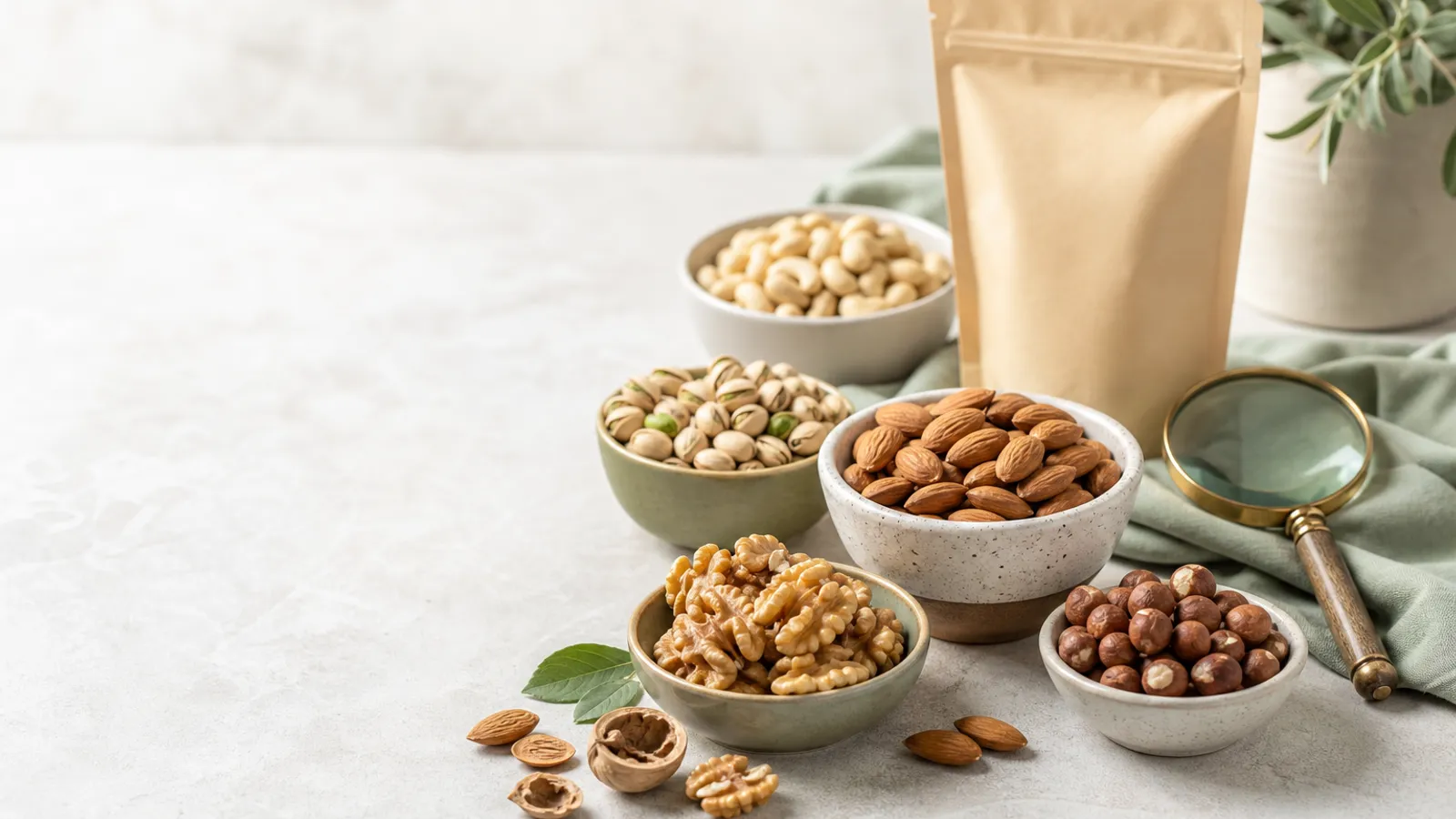
For nut free school snacks, clarify what the school means. “Nut free” may refer to peanuts, tree nuts, or both, and coconut is no longer on the FDA’s tree nut list under the agency’s January 2025 guidance. Tree nuts that remain on the FDA list include almond, cashew, pecan, pistachio, walnut, hazelnut, Brazil nut, macadamia, pine nut, and chestnut. If a label or school rule uses broad wording, ask for specifics before sending the snack.
- Free from milk, egg, or peanuts
- Nut free or peanut free
- Top 9 allergen free
- Gluten-free
- Made in a dedicated facility
- No artificial flavors or colors
Plan for school, childcare, and parties
School and childcare snacks need more than a good label routine at home. Ask for the current classroom or building rules before sending food. Some settings restrict peanuts or tree nuts; others limit shared snacks, require original packaging, or ask families to send only individually wrapped items. Follow the setting’s rule even if your child’s allergy profile is different.
For parties and classroom events, send clear instructions early. If the event includes cupcakes, candy, pizza, popcorn, or treat bags, ask who is buying the food, whether the original packaging will be available, and how substitutions will be handled. Avoid unlabelled shared snacks, bulk-bin foods, bakery counter items without a complete ingredient label, and homemade foods unless they fit the child’s plan and you have enough ingredient and preparation information to make a decision.
Cross-contact can matter in shared settings. FDA allergen labeling focuses on allergens intentionally used as ingredients. Advisory statements such as “may contain,” “processed in a facility,” or “made on shared equipment” are voluntary and are not standardized risk levels. The absence of advisory wording does not prove that cross-contact is impossible, so decisions about those statements should follow the child’s healthcare professional’s guidance and written plan.
- Ask for classroom food rules
- Send snacks in original packaging when required
- Label the child’s snack container if appropriate
- Confirm who approves substitutions
- Avoid unlabelled shared food
- Keep party treats separate until reviewed
Tell caregivers exactly what to check
What should you tell school staff? Give them current written instructions, emergency contact details, and the child’s allergy and emergency care plan. Keep the language practical: which foods or ingredients the child avoids, whether shared snacks are allowed, who may approve substitutions, and where reviewed snacks are kept. Do not expect staff, relatives, coaches, or babysitters to interpret unclear labels on the fly.
Create a short snack rule that is easy to repeat: use only the foods provided by the family or only foods with an original label that has been checked against the child’s plan. If the school allows outside treats, explain what should happen when a label is missing, when the package has been thrown away, or when another parent says the food is “allergen-free” without documentation.
Technology can help organize a second look, but it should not replace the official package label or the child’s plan. Food Checker can support label review when you scan an ingredient label, but caregivers still need to verify the package, contact the manufacturer when needed, and follow instructions from the child’s healthcare professional.
- Child’s allergens and foods to avoid
- Whether shared snacks are allowed
- Where reviewed snacks are stored
- Who can approve substitutions
- What to do with missing labels
- Emergency contacts and care plan location
When the label is unclear or the situation is uncertain
If a snack label is incomplete, hard to read, or does not match what you expected, set the snack aside until you can verify it. Do not guess from the front of the package, a different flavor, an online image, or a previous purchase. This is especially important with variety packs, party foods, imported snacks, and packages that have been separated from their box.
Contact the manufacturer with the exact product name, flavor, size, lot code, and best-by date. Ask direct questions about the ingredient or process that is unclear, such as whether a flavor contains milk, whether a seasoning includes wheat or soy, or whether the product is made on shared equipment with peanuts or tree nuts. Manufacturers may not always provide enough detail; if the question remains unresolved, follow the child’s care plan and choose a different option.
For symptoms, diagnosis questions, or decisions about how strictly to avoid an ingredient or advisory statement, rely on the child’s healthcare professional and written plan. A label checklist is a practical tool for choosing and packing snacks, but it does not replace medical advice, emergency instructions, or the official package label.
- Set the snack aside
- Keep the package and lot code
- Ask the manufacturer specific questions
- Do not use a missing or unclear label as proof
- Follow the child’s healthcare professional and care plan